
How Your HVAC System Helps With Allergy Relief
At Tom’s Heating & Air Conditioning, we know that a well-maintained HVAC system filters and circulates air, reducing allergens like pollen, dust mites, and mold spores throughout your home. According to the CDC, more than a quarter of U.S. adults suffer from seasonal allergies. We see the difference a properly cared-for system makes every day, and we help our neighbors in Van Buren, AR keep those irritants under control.
Key Takeaways
- A notable share of Americans suffer from seasonal allergies, according to CDC data. That statistic is exactly why we treat allergy relief as a core part of HVAC care, not an afterthought.
- Our HVAC systems filter and circulate air to reduce indoor allergens and pollutants effectively. When a system runs the way it should, it captures irritants before they ever reach the rooms your family spends the most time in.
- Regular HVAC maintenance improves indoor air quality and reduces how severe allergy symptoms become. We recommend scheduled filter changes and duct checks so allergens never get the chance to build up unnoticed.
- Upgrading the right HVAC features enhances breathing comfort for people managing allergies and asthma. Even small changes, like a better filter or added humidity control, add up to a noticeably cleaner home.
Are Allergens Hiding Inside Your HVAC System?
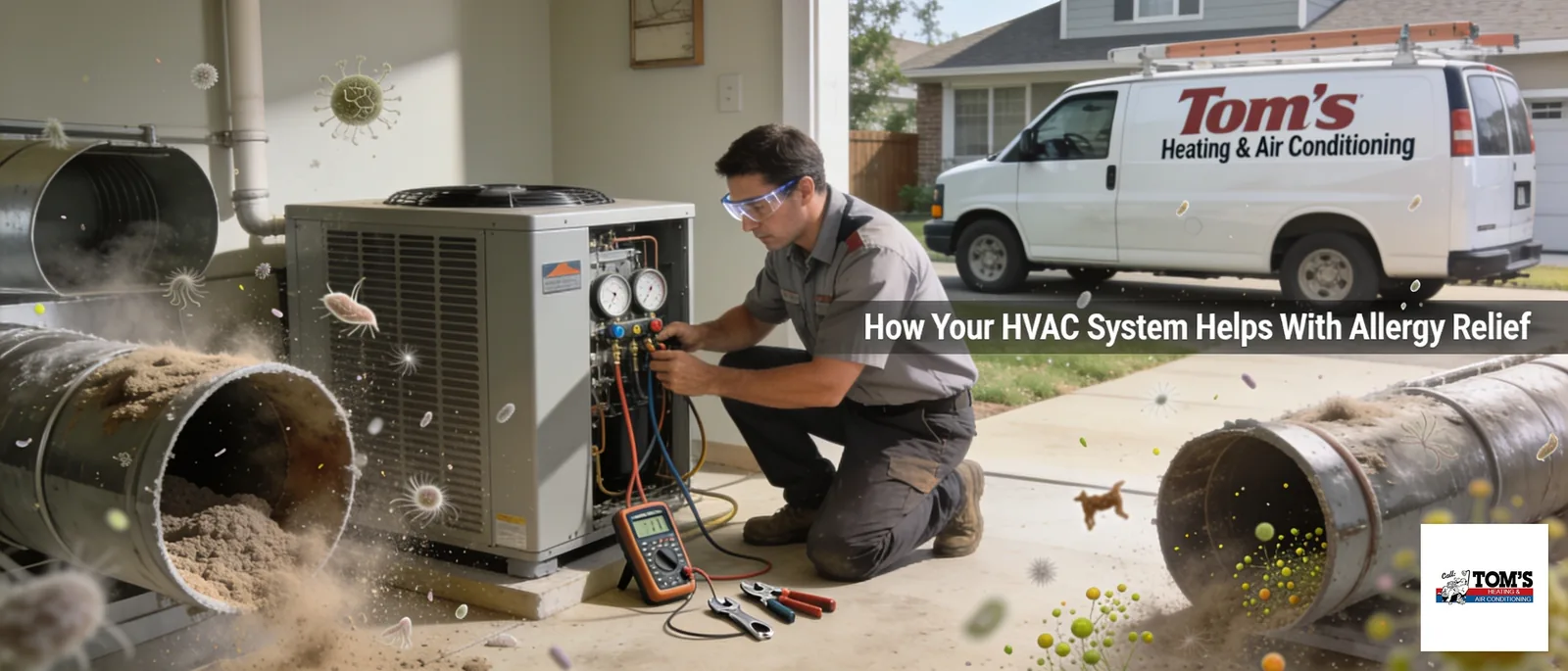
Yes — allergens absolutely hide inside HVAC systems, and a poorly maintained system actively spreads those allergens from room to room. Dust mites, mold spores, pet dander, and pollen all find their way into ductwork, where they wait to be recirculated through your home every time the system runs.
We see indoor air quality suffer most when duct maintenance falls behind. Dust accumulates inside air ducts over time, turning those passages into a reservoir for allergens. Once the system kicks on, that buildup gets pushed through every vent in the house. The result is a home that feels clean on the surface but circulates irritants with every heating or cooling cycle.
What allergens are most commonly found inside HVAC ductwork?
The most frequent offenders are dust mites, mold spores, pet dander, and outdoor pollen that drifts indoors. Each of these particles is small enough to travel through ductwork and settle throughout living spaces. Without regular inspection and cleaning, ducts become a hidden source of ongoing exposure.
How do dirty HVAC filters affect allergy symptoms?
HVAC filters are the first line of defense against airborne particles, but a clogged or low-quality filter stops doing its job. When a filter is overwhelmed, allergens bypass it entirely and re-enter the air supply. We find that upgrading to a higher-efficiency filter and replacing it on schedule makes a measurable difference in allergy relief for everyone in the household.
We serve homeowners throughout Van Buren, AR, and we inspect ductwork, evaluate filter performance, and identify the hidden allergen sources that routine cleaning misses. A well-maintained system does not just heat and cool — it protects the air your family breathes every day.

How Does Your HVAC Affect Indoor Air Quality?
Your HVAC system does far more than regulate temperature — it actively shapes the air your family breathes every day. We recognize that a well-functioning HVAC unit is a crucial appliance, and [indoor air quality](https://www.tomsheatandair.com/indoor-air-quality-arkansas-river-valley/) is one of the most important things it controls.
Our HVAC systems use filtration and ventilation to capture and remove common airborne irritants before they circulate through your living spaces. Without proper maintenance, those same systems can spread pollutants instead of eliminating them.
What Allergens Does an HVAC System Remove?
HVAC filters trap a wide range of particles that trigger allergy and asthma symptoms. Common allergens we filter out include:
- Pollen from grasses, trees, and weeds settles on outdoor surfaces before drifting indoors on shoes, clothing, and open doors. A clean, well-matched filter catches most of it before it ever reaches your lungs.
- Dust mites and their byproducts thrive in bedding, carpet, and upholstery, then travel through the air when disturbed. Regular filtration keeps their numbers from building up between cleanings.
- Pet dander sheds continuously from cats and dogs and stays airborne longer than most people realize. A properly sized filter pulls it out of circulation instead of letting it resettle on furniture.
- Mold spores develop wherever moisture lingers, then spread through ductwork once the system runs. Filtration paired with humidity control keeps spore counts from climbing.
When filters are clean and functioning correctly, we see these particles get captured before they reach your lungs. A clogged or outdated filter loses that protective ability fast.
Why Does Air Quality Matter More for Allergy and Asthma Sufferers?
Good allergy relief starts with the air inside your home. For people managing allergies or asthma, pollutants and allergens in household air directly worsen symptoms, making it genuinely hard to breathe comfortably in a space that should feel safe.
The stakes are real. A poorly maintained HVAC system recirculates the very particles that trigger flare-ups, turning your home into a source of discomfort rather than a refuge. That’s why we treat every service call as an opportunity to protect not just your comfort, but your health.
We keep your system running at its best so your home in Van Buren, AR stays the clean, comfortable environment your family deserves.

Which HVAC Filters Best Reduce Allergy Symptoms?
The right HVAC filters make a measurable difference for allergy sufferers. A well-maintained HVAC system actively removes airborne allergens — including pollen, dust, and mold spores — creating a healthier indoor space for everyone in the home.
We see firsthand how filter choice shapes indoor air quality. Not all filters perform equally; the key variables are filtration efficiency, airflow compatibility, and how often the filter gets replaced.
Here are the filter types we most commonly recommend for allergy-prone households:
- Standard fiberglass filters offer basic protection and are the most affordable option available. They capture large particles but allow smaller allergens to pass through freely, so we rarely recommend them for allergy-sensitive households.
- Pleated filters are a significant step up from fiberglass. Their increased surface area traps finer particles, including many common pollen types, without restricting airflow the way denser media can.
- High-efficiency filters, including HEPA-rated and MERV 13 options, are the strongest choice for allergy relief. These capture the smallest airborne irritants and are the option we recommend most for households with asthma or severe allergies.
- Electrostatic filters use a static charge to attract particles instead of relying purely on dense media. Reusable models exist, but they require consistent cleaning to stay effective, so we only recommend them to homeowners willing to keep up with that upkeep.
Do HVAC filters alone solve indoor allergy problems?
Filters are essential, but they work best as part of a complete system. Air filters, humidity control, and clean ductwork work together to improve air quality across every room, and neglecting any one of those three elements limits the benefit of even the best filter.
How does a properly tuned HVAC system improve air quality?
When tuned properly, an HVAC system does more than heat or cool a space — it actively purifies the air circulating through the home. Regular maintenance keeps the system running at peak filtration efficiency, so allergens get captured rather than recirculated. We help homeowners in Van Buren, AR choose the right filter and maintenance schedule to keep allergy symptoms under control year-round.

Can Leaky Ducts Worsen Your Allergy Symptoms?
Leaky ducts directly worsen allergy symptoms by pulling dust, dirt, and other contaminants into the duct system and spreading those particles throughout every room. Duct leaks are not a minor inconvenience — they actively undermine indoor air quality in ways that standard cleaning cannot fix.
When ducts develop gaps or cracks, conditioned air escapes into unconditioned spaces like attics and crawl spaces. The HVAC system then works harder to compensate, drawing in unfiltered air from those same contaminated spaces. That unfiltered air carries allergens straight into your living areas.
What Contaminants Do Leaky Ducts Introduce?
Leaky ducts act as an open door for airborne irritants. Common contaminants that enter through duct leaks include:
- Dust and dirt get pulled in from attics, crawl spaces, and wall cavities every time the system draws unfiltered air through a gap. Over time, that steady pull turns small leaks into a constant source of household grime.
- Mold spores travel in from damp, unconditioned areas such as attics and crawl spaces. Once inside the duct system, they spread to every room the ductwork serves.
- Insulation particles and other debris from structural voids can enter through cracked or disconnected duct sections. Breathing that material in adds an extra irritant on top of common seasonal allergens.
- Pet dander and pollen bypass HVAC filters entirely when they enter downstream of the filter through a duct leak. That means even a high-efficiency filter can’t stop them.
Each of these particles circulates through your home every time the system runs, making consistent allergy relief harder to achieve no matter how often you clean.
How Do You Know If Duct Leaks Are Affecting Your Air Quality?
Signs of duct leakage include uneven room temperatures, excessive dust buildup on surfaces, and allergy symptoms that persist even after filter changes. If rooms that should be comfortable feel stuffy or stale, duct integrity is worth investigating. These symptoms point to a system that is circulating compromised air rather than clean, conditioned air.
We offer professional service to diagnose and repair ductwork problems, keeping your home in Van Buren, AR comfortable and your air as clean as possible year-round. We’re glad to schedule an inspection whenever you’re ready.
Should You Keep Windows Closed During Allergy Season?
Yes — keeping windows closed during allergy season is one of the most direct steps toward protecting indoor air quality. Open windows invite outdoor allergens straight into living spaces, and a well-maintained HVAC system becomes far less effective when competing against a constant stream of incoming irritants.
The CDC reports that more than a quarter of U.S. adults suffer from seasonal allergies, and nearly one in five children do too. Those numbers represent a lot of households losing sleep, missing work, and struggling through daily routines. Closing windows and letting your HVAC system manage airflow is a simple, no-cost move that protects everyone inside.
What allergens are you actually keeping out?
Seasonal allergy irritants cover a wider range than most people expect. Keeping windows shut blocks all of the following from entering freely:
- Grass, tree, and weed pollen ride the wind for miles and settle on every open surface once they drift inside. Closed windows stop that steady drift before it ever starts.
- Leaf mold spores form as fallen leaves decompose outdoors, especially in damp, shaded areas near the home. Once airborne, they travel through open windows just as easily as pollen does.
- Dust mites carried on outdoor air currents settle into fabric and carpet the moment they enter a room. Keeping windows closed cuts off one of their easiest paths inside.
- Wildfire smoke particles can travel long distances and slip indoors through even a small gap. They’re especially irritating for anyone already managing allergies or asthma.
Each of these triggers sneezing, congestion, and itchy eyes, and once they settle into carpet and furniture, they’re hard to remove.
Does closing windows actually improve allergy relief?
Closed windows work best when paired with a properly maintained HVAC system. Allergy relief depends on more than just blocking outdoor air — the system circulating indoor air needs quality HVAC filters to trap the particles that do make it inside. Upgrading filtration and keeping the system well-maintained amplifies the benefit of closed windows significantly.
We help homeowners in Van Buren, AR get the most from their HVAC systems during allergy season. A few targeted upgrades make a measurable difference in how clean and comfortable your home feels all season long.
Does Humidity Control Help Reduce Indoor Allergens?
Humidity control is a proven tool for reducing allergen levels inside a home. Balanced moisture levels discourage the growth of mold, dust mites, and other common triggers that thrive in air that is too damp or too dry.
Indoor air quality depends on more than just temperature. HVAC filters, humidity control, and clean ductwork work together to improve air quality across every room — no single component does the job alone. When all three elements function in sync, the HVAC system stops being just a comfort tool and becomes a frontline defense against airborne irritants.
How Does Humidity Affect Allergen Growth?
Excess moisture in the air creates ideal conditions for mold spores and dust mites to multiply. Keeping indoor humidity within a healthy range cuts off the environment those allergens need to survive. A properly maintained heating and cooling system maintains the right humidity levels, protecting both the people inside and the building’s structure and contents.
What Happens When Humidity Goes Unmanaged?
Unmanaged humidity lets allergen populations grow unchecked, worsening symptoms for anyone sensitive to mold or dust. The effects spread room to room through the ductwork, meaning one problem area can compromise allergy relief throughout the entire home. Clean ducts paired with active humidity control stop that cycle before it starts.
We serve residential customers throughout Van Buren, AR, and we treat humidity control as part of a complete HVAC strategy — not an afterthought.
Key components that work together for cleaner air:
- Properly sized air filters trap the particles that would otherwise recirculate through the home. Choosing the right filter for your specific system matters just as much as changing it on schedule.
- Calibrated humidity controls keep moisture levels in the range where mold and dust mites struggle to multiply. We check this as part of every maintenance visit.
- Clean, sealed ductwork keeps conditioned, filtered air moving where it belongs instead of leaking into attics or crawl spaces. Sealed ducts also stop unfiltered air from being pulled back into the system.
All three need attention, and neglecting any one of them limits the performance of the other two.
Is Ductless HVAC a Better Option for Allergy Sufferers?
Ductless HVAC systems are an excellent option for allergy sufferers seeking cleaner, more controllable indoor air quality at home. Traditional ducted systems circulate air through a network of passages that collect dust, pollen, and mold — ductless setups eliminate that hidden reservoir entirely.
Many homeowners in Van Buren, AR choose ductless systems specifically because of the cleaner airflow described in our guide, When to Replace Your HVAC System: Signs & Benefits. Without ductwork to harbor allergens, the air delivered to each room stays cleaner from the start. A reliable HVAC system, ductless or otherwise, turns a home into a shielded space against the seasonal allergens that sneak through doors and windows, and ductless systems simply remove one of the biggest weak points in that defense.
What Makes Ductless Systems Friendlier for Allergy Sufferers?
Ductless units filter air at the point of delivery rather than pushing it through long runs of ductwork. That means fewer opportunities for allergy relief to be undermined by accumulated debris inside hidden passages. Each indoor unit handles its own zone, so a problem in one area stays contained rather than spreading throughout the entire home.
Here is a quick comparison of how ductless and ducted systems stack up for allergy management:
| Feature | Ductless System | Traditional Ducted System |
|---|---|---|
| Allergen accumulation points | Minimal | High (ductwork throughout home) |
| Zone-level air control | Yes | Limited |
| Filter access | Easy, at each unit | Centralized, often harder to reach |
| Risk of duct leaks spreading allergens | None | Present |
Do Ductless Systems Still Require Filter Maintenance?
Yes — HVAC filters in ductless units still need regular cleaning and replacement to perform well. Neglected filters lose their ability to trap pollen, dust, and pet dander, which defeats the system’s core advantage. We work with all major ductless brands and installations, and our team keeps every filter and component performing at its best.
How Can Tom's Heating & Air Conditioning Help You Breathe Easier Today?
We’re a family-owned, locally operated company built on dependable service for residential and light commercial customers in Van Buren, AR. We connect allergy relief directly to well-maintained HVAC systems, because cleaner air starts with the right equipment and the right team.
Poor indoor air quality doesn’t just cause discomfort — it worsens allergy and asthma symptoms, disrupts sleep, and forces your system to work harder than it should. We address those problems at the source.
What Services Do We Offer to Improve Indoor Air Quality?
We provide air conditioning and heating service, sales, and installation for both residential and light commercial properties. Our work covers the full scope of what your system needs to filter and circulate air effectively, from routine maintenance to full system replacement.
Here’s what we bring to every job:
- HVAC filter inspection, upgrades, and replacement reduce the airborne allergens circulating through your home. We match the filter to your system so you get better protection without straining your airflow.
- Heating and cooling system tune-ups keep airflow clean and consistent throughout the year. We check the components that most often let allergens back into circulation when they’re overlooked.
- New system installation is sized correctly for your home or commercial space from the start. Getting that sizing right affects both comfort and how well the system filters the air it moves.
- Sales of equipment designed to support healthier indoor environments, including filtration and humidity control options. We help you choose equipment that fits both your allergy concerns and your home.
Why Do Homeowners in Van Buren, AR Trust Us?
Customers consistently tell us we show up when called and deliver work that holds up. That responsiveness matters when allergy season peaks and your system can’t wait, and we earn that trust one service call at a time.
Ready for Cleaner Air in Your Home?
We believe your HVAC system plays a vital role in creating a healthier home environment for allergy sufferers. By maintaining clean filters, keeping humidity properly balanced, and circulating filtered air throughout your space, we help your heating and cooling system actively reduce the allergens that trigger your symptoms. Taking control of your indoor air quality transforms your home into a genuine refuge from outdoor allergens, so you and your family can breathe easier year-round. Reach out to Tom’s Heating & Air Conditioning whenever you’re ready to talk through your options — cleaner air in your Van Buren, AR home starts with one conversation.
FAQ
What allergens does an HVAC system remove?
HVAC filters trap pollen from grasses, trees, and weeds, dust mites and their byproducts, pet dander, and mold spores before they circulate through your living spaces.
How do dirty filters affect allergy symptoms?
A clogged or low-quality filter allows allergens to bypass it entirely and re-enter the air supply, worsening symptoms for household members exposed to those recirculated irritants.
Where do allergens hide inside an HVAC system?
Dust mites, mold spores, pet dander, and pollen collect inside ductwork and get pushed through every vent in the house each time the system runs.
