

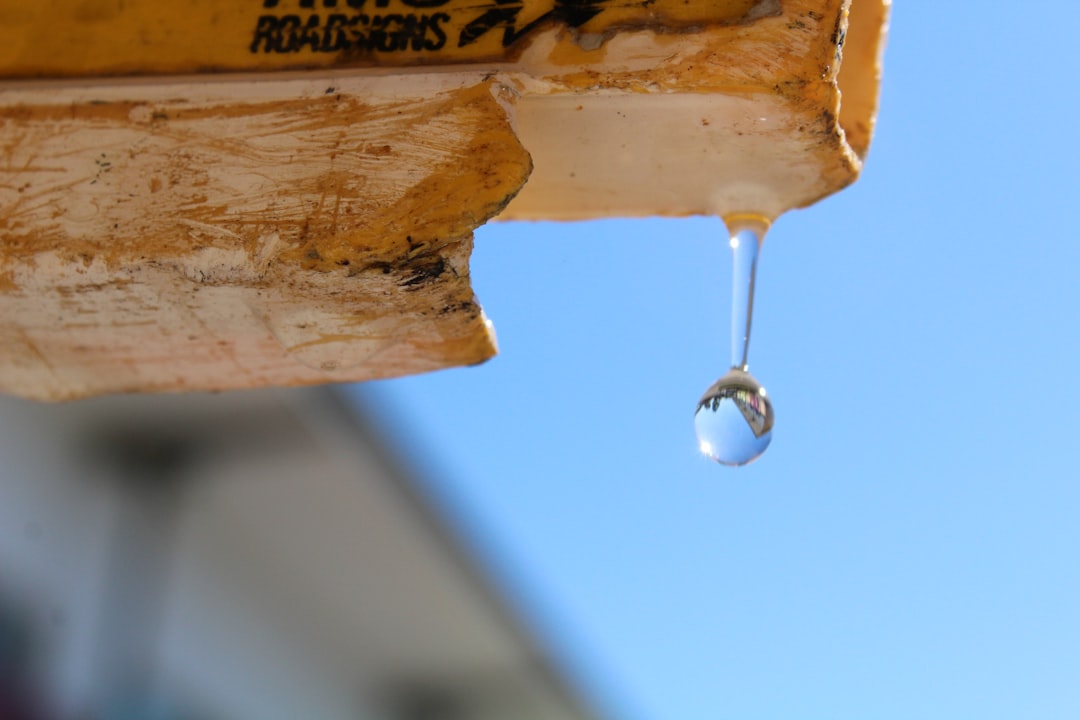
Why Can a Small Roof Leak Cause Big Problems? The Answer Might Surprise You
Can a small roof leak cause big problems — and the short answer is yes, absolutely. Here’s a quick look at what’s really at stake:
- Within 24-48 hours: Mold spores begin colonizing damp surfaces
- Within the first week: Wood rot starts spreading through rafters and decking
- Within 1-4 weeks: Insulation loses effectiveness, energy bills begin climbing
- Within 1-6 months: Structural damage accelerates, hidden costs multiply
- At 6+ months: You may be facing major reconstruction, not just a patch job
Most homeowners see a faint brown ring on the ceiling and tell themselves they’ll deal with it later. But by the time that stain appears, water has likely already been traveling through your insulation, along your rafters, and into places you can’t see — for weeks.
That slow drip isn’t just a nuisance. It’s the start of a chain reaction.
Water doesn’t stay where it lands. It follows gravity and capillary action, spreading horizontally through insulation and framing far beyond the original entry point. What looks like a minor ceiling stain can represent damage happening silently across multiple layers of your home’s structure.
And in Rochester’s climate — with its freeze-thaw cycles, heavy snowfall, and wet springs — that damage accelerates faster than it would almost anywhere else.
I’m Matthew Hebert, founder of Tall Pines Roofing and a roofing professional with over two decades of experience in Upstate New York, where I’ve seen how a small roof leak can cause big problems — turning a simple shingle repair into a full structural restoration after just one harsh winter. If you’re noticing any early warning signs, keep reading — what you learn here could save you from a very costly mistake.

Can a Small Roof Leak Cause Big Problems for Your Home’s Structure?
When we talk about the bones of your home, we are talking about the roof trusses, rafters, and decking that keep everything standing. These components are typically made of wood, and wood has a natural enemy: persistent moisture.
Many homeowners ask us, “can a small roof leak cause big problems even if I don’t see a puddle?” The answer lies in the silent progression of wood rot. When water seeps through a missing shingle or a cracked piece of flashing, it doesn’t just sit there. It saturates the plywood decking (the “skin” of your roof). Over time, this plywood begins to delaminate—meaning the layers of wood pull apart—and lose its strength.
Once the decking is compromised, the water moves to your load-bearing beams and rafters. In our Roof Repair Rochester NY Guide, we highlight how the Rochester climate adds extra stress to this process. During our April 2026 spring rains, that moisture sits in the wood; come winter, it freezes and expands, physically tearing the wood fibers apart.
If left unaddressed, this structural decay leads to:
- Sagging Ceilings: The weight of sodden drywall and insulation can cause your ceiling to bow or even collapse.
- Compromised Trusses: If the main “ribs” of your roof rot, the entire system loses its ability to handle heavy snow loads.
- Foundation Issues: Believe it or not, a roof leak can even affect your foundation. If water bypasses your gutter system because of a roof failure, it pools at the base of your home, leading to basement dampness and shifting soil.
The Hidden Progression of Water Damage and Mold
Water damage is a race against the clock. Most people don’t realize that mold doesn’t wait for a “major” flood; it only needs a little bit of consistent humidity to take over.
| Timeline | Damage Progression |
|---|---|
| 24-48 Hours | Mold spores begin to colonize paper-faced drywall and wood. |
| 1-7 Days | Wood begins to swell; musty odors become noticeable. |
| 1-4 Weeks | Metal fasteners (nails) rust; drywall tape peels; mold becomes visible. |
| 1-6 Months | Structural wood rot sets in; HVAC systems may spread spores. |
The health risks associated with mold are no joke. Mold increases the risk of developing respiratory problems by 30% to 50%. This is especially dangerous because mold thrives in the dark, warm, and humid environment of an attic. By the time you smell that “old basement” scent in your upstairs hallway, the mold has likely already spread through your insulation and perhaps even into your HVAC ductwork.
At Tall Pines Roofing, we specialize in Roof Leak Repair Rochester NY because we know that stopping the water is only half the battle—you have to stop the biology, too. Black mold and other fungi can destroy porous surfaces like drywall and ceiling tiles, turning a simple patch into a massive remediation project.
Why Homeowners Insurance Often Denies Claims for Neglected Leaks
This is perhaps the most painful part of the “butterfly effect.” You might assume that your insurance policy is a safety net that will catch you whenever the roof fails. However, there is a massive difference between “sudden and accidental” damage and “gradual” damage.
Insurance companies generally cover damage caused by a specific event, like a tree limb falling during a storm in April 2026. However, they frequently deny claims for damage resulting from a lack of maintenance. In fact, some industry data suggests that gradual water damage claims are denied at a rate of approximately 70%.
If an adjuster climbs onto your roof and sees that the leak started because of a rusted-out flashing or a shingle that has been missing for two years, they will likely classify the resulting mold and rot as “preventable.” To protect yourself, we recommend reading our guide: Does Homeowners Insurance Cover Roof Leaks?.
The key to a successful claim is documentation. We always advise homeowners to:
- Perform post-storm inspections within 48 hours.
- Take photos of any visible damage immediately.
- Keep receipts for any minor maintenance performed over the years to prove you haven’t neglected the property.
Secondary Consequences: Energy Efficiency and Electrical Hazards
The damage from a leak isn’t always something you can see or smell—sometimes, you feel it in your wallet.
The Insulation Trap
Most Rochester homes rely on fiberglass or cellulose insulation to keep heat in during the winter and out during the summer. When this material gets wet, it loses its R-value (insulation effectiveness) almost instantly. Wet insulation clumps together and compresses. Even after it “dries,” it often stays compacted, leaving huge gaps in your home’s thermal envelope.
This leads to “thermal bridging,” where heat escapes directly through the damp spots. Homeowners often see their energy bills spike by 10-25% because their HVAC system is working overtime to compensate for ruined insulation. For more on how this works, check out A Homeowners Guide to Roof Leaks.
The Fire Risk
Water and electricity are a terrifying combination. In many homes, electrical wiring for ceiling fans, lights, and outlets runs right through the attic floor—exactly where roof leak water tends to pool.
- Short Circuits: Water entering a junction box can cause sparks and “closed open” circuits.
- Corrosion: Even if a fire doesn’t start immediately, the moisture causes metal conduits and wire connections to corrode, creating a long-term fire hazard.
- Ceiling Fans: A leak that follows the wiring down to a ceiling fan can cause the motor to short out or even lead to an electrical shock if you touch the switch.
Frequently Asked Questions about Roof Leaks
How quickly can a small roof leak cause big problems in Rochester?
In Rochester, the timeline is much shorter than in milder climates. Because of our intense freeze-thaw cycles, a tiny crack in your flashing can be forced wide open by ice in a single night. Mold can colonize within 24-48 hours of that first spring thaw. If you ignore a leak through one winter season, the weight of the snow combined with the weakened, rotting wood can lead to a total structural failure. If you’re in the middle of a crisis, see our Emergency Roof Repair Rochester NY Guide.
What are the warning signs that a small leak has already caused hidden damage?
By the time you see a drip, the damage is usually well underway. Watch for these “sneaky” signs:
- Peeling or Bubbling Paint: This often means water is trapped behind the latex skin of your paint.
- Rusted Roofing Nails: If you see rusted nail heads in your attic, the humidity is far too high.
- Dark Streaks on Rafters: These are “water trails” that show where the leak is traveling.
- Musty Smells: If your upstairs or attic smells like a damp locker room, mold is already present.
- Warped Floorboards: Sometimes water travels down the inside of a wall and pools under your flooring.
For a deeper dive, read our Leaking Roof Repair Rochester NY Guide.
Can a small roof leak cause big problems with my home’s electrical system?
Yes. As mentioned earlier, water often follows the path of least resistance, which frequently includes electrical conduits. If you notice flickering lights during a rainstorm or if a circuit breaker trips every time it pours, you may have an “electrical leak.” This is a high-priority emergency. You can find help through our service page: My Roof is Leaking – Find Emergency Roof Repair Services in Rochester NY.
I’m looking for a reliable roof inspection. Who in Rochester specializes in leak prevention?
At Tall Pines Roofing, we believe in the “1-10-100 Rule”: spending $1 on prevention saves you $10 in repairs and $100 in total reconstruction. We don’t just “patch” roofs; we perform root-cause analysis to ensure that small leak doesn’t come back.
Our team provides comprehensive bi-annual maintenance, including:
- Gutter Cleaning: Preventing water backup that leads to ice dams.
- Flashing Repair: Resealing the “vulnerable” spots around chimneys and vents.
- Shingle Replacement: Catching that single $25 shingle before it becomes a $25,000 nightmare.
We offer the “Tall Pines Guarantee,” which means we provide real-time updates, a 30-year warranty, and a job site that is cleaner than we found it. We know the Rochester area, we know the weather, and we know exactly how to stop a small leak from ruining your home.
If you suspect your roof might have a “minor” issue, don’t wait for the next storm to prove you right. Contact us for a professional assessment today.
