

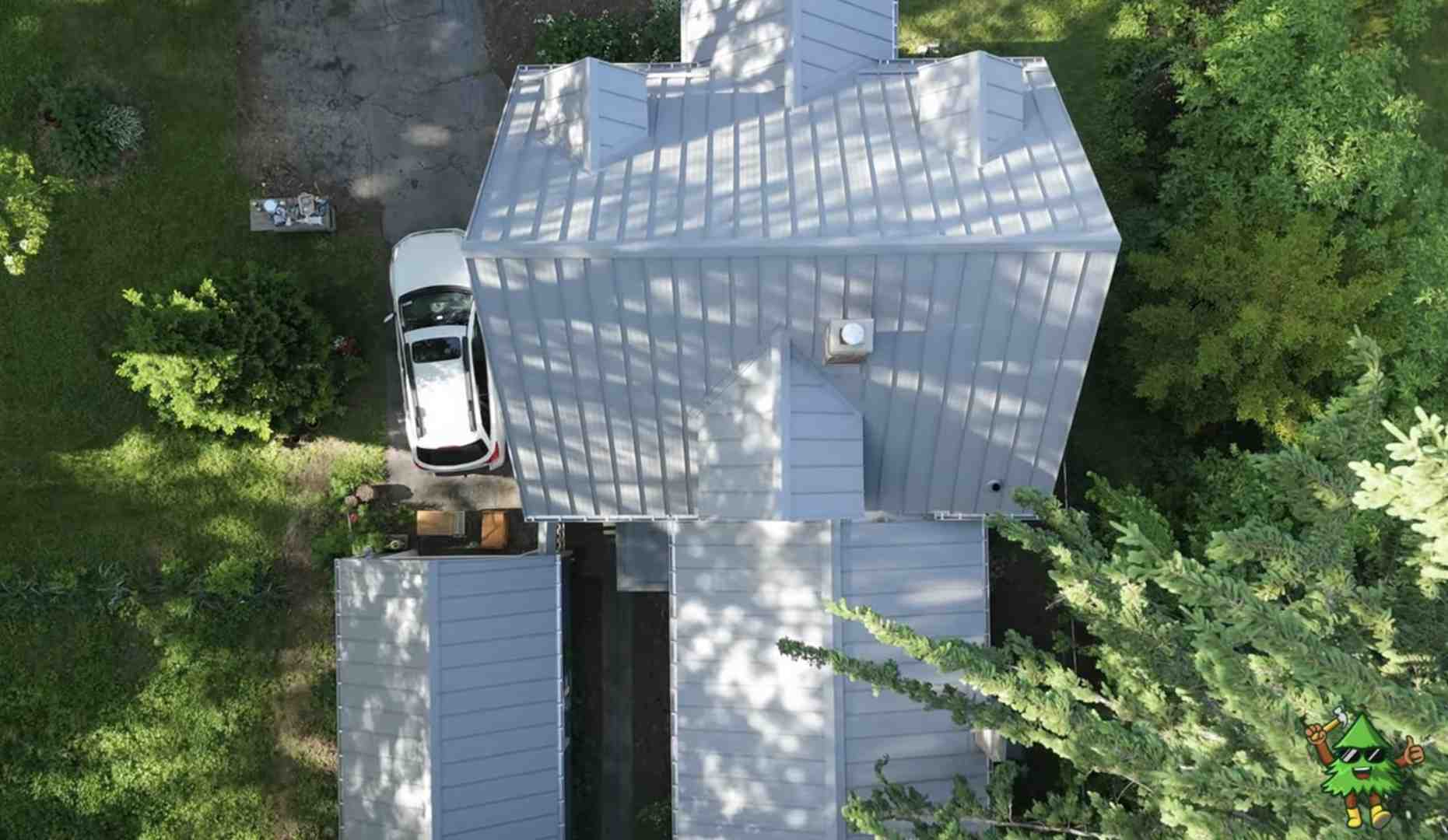
Why Roofing Companies Are Turning to Drones — And What It Means for Your Home
Why roofing companies use drones for inspections comes down to a few clear advantages: safety, speed, and accuracy. Here’s a quick breakdown:
- Safety — Drones keep inspectors on the ground, eliminating fall risks from ladders and steep roofs
- Speed — A drone can survey an entire roof in as little as 10 to 30 minutes
- Accuracy — High-resolution cameras and thermal imaging catch damage that’s easy to miss with the naked eye
- Storm response — Drones can access debris-covered or unstable roofs safely after severe weather
- Documentation — Detailed photos, videos, and reports support insurance claims and maintenance planning
- Hard-to-reach areas — Complex roof shapes, valleys, and multi-story homes are easier to survey from the air
Not long ago, a roof inspection meant a roofer climbing a ladder, walking a steep pitch, and hoping conditions were safe enough to do it properly. Today, drone technology has changed that picture entirely — making inspections faster, safer, and far more detailed than traditional methods allowed. For homeowners in Upstate New York, where harsh winters and heavy storms put roofs under serious stress, understanding how this technology works can help you make smarter decisions about protecting your home.
I’m Matthew Hebert, founder of Tall Pines Roofing, and with over two decades of experience in the roofing industry, I’ve seen how understanding why roofing companies use drones for inspections can help homeowners get clearer answers and better outcomes — and it’s something we put to work for every homeowner we serve.

Why Roofing Companies Use Drones for Inspections
When we talk about the evolution of the roofing industry, drones are perhaps the most exciting development since the invention of the pneumatic nail gun. We aren’t just using them because they are fun to fly (though, admittedly, they are); we use them because they solve some of the oldest problems in our trade.
The primary reason why roofing companies use drones for inspections is fall prevention. In our line of work, safety isn’t just a buzzword—it’s our number one priority. By keeping our technicians’ boots on the ground during the initial assessment, we eliminate the risk of falls from ladders or steep surfaces.
But it goes beyond just staying safe. Drones provide access to hard-to-reach roofs that might otherwise require expensive scaffolding or heavy machinery just to see the surface. They offer faster documentation, capturing hundreds of high-resolution images in the time it would take a person to walk one small section of the roof. This technology also allows for a completely contact-free process, which many homeowners appreciate for its lack of intrusion.
Furthermore, drones allow us to create historical records. By using GPS-guided flight paths, we can return to the exact same spot in the sky a year later to see how a specific area of your roof has aged. This level of 3D mapping and precision helps us spot trends and potential failures long before they become expensive leaks.
Why roofing companies use drones for inspections after storms
In Rochester, we are no strangers to wild weather. From sudden hailstorms to high winds that whip off Lake Ontario, our roofs take a beating. After a significant weather event, a roof can be a dangerous place. There might be loose shingles, hidden structural damage, or debris like fallen branches making the surface unstable.
Drones are the ultimate emergency response tool. We can deploy a drone to check for hail damage or wind uplift without ever stepping onto a compromised surface. This provides the high-quality visual evidence needed for insurance documentation, often speeding up the claims process. If you’ve recently dealt with a storm, you can learn more about how we handle these situations in our Emergency Hail Damage Repair Rochester NY Guide.
Why roofing companies use drones for inspections on steep or complex roofs
Not every roof is a simple “up and over” gable. Many beautiful homes in the Rochester area feature multi-story designs, incredibly steep slopes, intricate valleys, and numerous features like chimneys, skylights, and dormers.
Inspecting these manually is a slow, methodical process that involves a lot of “tie-offs” and safety rigging. A drone, however, doesn’t care how steep the pitch is. It can hover inches away from a chimney’s flashing or fly directly over a deep valley to check for debris buildup. This allows us to get a comprehensive survey of the most complex architectural designs with zero risk to the technician or the roofing material itself.

How Drones Make Roof Inspections Safer, Faster, and More Accurate
The transition from manual inspections to drone-assisted surveys isn’t just about changing tools; it’s about improving the entire experience for the homeowner. By moving to a ground-based inspection model, we provide a level of service that was previously impossible.
Safety benefits homeowners should know
When a roofer climbs onto your home, there is always a small amount of risk—not just to the person, but to the property. Walking on certain types of roofing, especially older shingles or fragile slate, can actually cause damage. During a drone inspection, your roof remains untouched.
We also eliminate the risk of accidents on your property. Wet surfaces, post-storm hazards, and moss-covered shingles are no longer obstacles. By conducting safer surveys, we ensure that the only time someone needs to be on your roof is when it’s time to actually perform the work.
Speed and documentation advantages
Time is a precious resource. A traditional manual inspection can take several hours if the roof is large or complex. In contrast, a drone can often complete a full visual sweep in 10 to 30 minutes.
The documentation provided is also vastly superior. Instead of a few blurry photos taken from a smartphone while balancing on a ladder, you receive a gallery of crystal-clear, annotated images and video evidence. This creates a “before-and-after” record that is invaluable for maintenance tracking and insurance support.
| Feature | Manual Inspection | Drone Inspection |
|---|---|---|
| Average Time | 1–3 Hours | 10–30 Minutes |
| Fall Risk | High | Zero (Ground-based) |
| Property Impact | Potential for foot traffic damage | No contact |
| Data Quality | Limited photos | 4K Video & High-Res Photos |
| Accessibility | Limited by pitch and height | Unrestricted |
Accuracy beyond the naked eye
Even the most experienced roofer can miss a hairline crack in a shingle or a tiny gap in the flashing when they are looking at it from a standing position. Drones can be equipped with powerful zoom lenses that allow us to see the texture of the granules on your shingles from just a few feet away.
Beyond what the human eye can see, some drones utilize thermal imaging. This helps us identify standing water under a flat roof membrane or air exfiltration (heat loss) that indicates a problem with your attic insulation or roof deck.
What Drones Can Detect During a Roof Inspection
A common question we get is, “Can a robot really see as much as a human?” The answer is actually “more.” Because we can position the drone at angles a human simply can’t reach, we get a much more thorough look at the health of your exterior.
If you’re curious about the technical side of how we do this, check out The Ultimate Guide to How Drone Roof Inspections Work.
Visible damage drones capture clearly
Drones are exceptional at spotting the “usual suspects” of roof damage:
- Broken or missing shingles: Easily spotted from an overhead “top-down” view.
- Exposed underlayment: High-res cameras highlight where the protective layers are showing.
- Rusted metal: We can zoom in on flashing and valleys to check for corrosion.
- Sealant failure: Drones can get close to vents and pipes to see if the caulking is cracking.
- Gutter issues: We can fly along the gutter line to check for clogs or sagging without moving a ladder every five feet.
Hidden issues drones can help uncover
This is where the technology really shines. Using thermal scans, we can detect moisture intrusion that hasn’t even begun to drip through your ceiling yet. Wet insulation holds heat differently than dry insulation; the drone picks up these temperature signatures, showing us exactly where a leak pathway is forming. This allows us to catch problems in the “yellow zone” before they turn into a “red zone” emergency.
Why roofing companies use drones for inspections over time
One of the best ways to use this technology is for long-term health monitoring. We recommend creating a digital archive of your roof. By comparing photos from year to year, we can see if granule loss is accelerating or if a small area of “ponding water” is getting larger. This proactive approach is the core of our Roof Maintenance Rochester NY Guide, helping you extend the life of your roof as long as possible.
When a Drone Inspection Is the Best Choice for Homeowners
While we love the technology, it’s important to know when it’s the most effective choice for you. In many cases, it’s the first step in a larger plan to keep your home safe and dry.
After severe weather in Rochester
If a major storm just rolled through your neighborhood, you don’t want to wait days for an inspection. Because drone flights are so fast, we can often get to your property and provide a report much sooner than companies relying solely on manual climbs. We look for wind uplift (where shingles are loosened but not blown off) and hail impacts that can compromise the shingle’s waterproof layer. For a full look at what we check for in our area, see our Roof Inspection Rochester NY Guide.
For routine maintenance and repair planning
If you are planning a repair or just want a baseline of your roof’s condition, a drone is perfect. It provides a clear scope of work. Instead of us telling you “the back corner looks bad,” we can show you a high-definition photo of exactly which shingles need replacing. This transparency is a big part of the “Tall Pines Guarantee.” For more on how we turn these findings into high-quality repairs, visit our Roof Repair Rochester NY page.
When weather or site conditions can limit drone flights
As much as we’d like them to be, drones aren’t invincible. There are a few situations where we might need to reschedule or supplement the drone flight with a manual check:
- Heavy Rain or Snow: Moisture can interfere with the drone’s electronics and obscure the camera lens.
- High Winds: If the winds are gusting too hard, it’s unsafe to fly the drone near your home.
- Low Visibility: Heavy fog or darkness makes it impossible to get the high-quality imagery we require.
- Dense Tree Cover: If your roof is completely shrouded by overhanging branches, the drone might not be able to “see” the shingles clearly.
What Homeowners Can Expect From a Drone Roof Inspection
If you’ve never seen a drone inspection in action, it’s a pretty seamless process. You don’t even need to be home, though many of our customers enjoy watching the flight!
The inspection process from takeoff to report
- Pre-flight check: We assess the weather and check for any local flight restrictions (like being too close to an airport).
- Property overview: The drone takes a series of high-altitude photos to map the entire property.
- Targeted areas: We fly closer to the roof, focusing on “trouble spots” like valleys, chimneys, and gutters.
- Data capture: We record both 4K video and high-resolution still images.
- Analysis: Back at the office (or sometimes right there on a tablet), we review the footage to find anomalies.
- Findings summary: We provide you with a detailed report, including annotated photos that explain exactly what we found.
What to ask when reviewing your results
When we sit down to go over the drone report with you, don’t be afraid to ask questions!
- “How severe is the granule loss compared to last year?”
- “Are the affected areas concentrated in one spot or spread out?”
- “What is the recommended timing for these repairs?”
- “Can we set this as a baseline for a monitoring plan?”
Frequently Asked Questions About Why Roofing Companies Use Drones for Inspections
Are drone roof inspections as reliable as a hands-on inspection?
Yes, and in many ways, they are more reliable. A drone doesn’t get tired, it doesn’t slip, and it can see things from angles that a human on a ladder cannot. However, if a drone identifies a soft spot or a potential leak, we may still perform a targeted manual check to feel the deck’s integrity. Think of the drone as the high-tech scout that tells us exactly where to focus our attention.
How long does a drone roof inspection usually take?
For a standard residential home in Rochester, the actual flight time is often between 10 and 20 minutes. The total process, including setup and a preliminary review of the photos with the homeowner, usually wraps up within 30 to 60 minutes.
Can a drone inspection find leaks?
While a drone doesn’t “see” water moving through your ceiling, drones equipped with thermal sensors can detect the temperature differences caused by trapped moisture. This allows us to find hidden “leak pathways” before they cause visible damage inside your home.
Conclusion
At Tall Pines Roofing, we believe in using the best tools available to protect your home. Understanding why roofing companies use drones for inspections helps you see the value in this modern approach. It’s safer for our team, faster for your schedule, and provides a level of documentation that gives you true peace of mind.
Whether you’ve just weathered a Rochester storm or you just want to make sure your aging roof is still holding strong, we are here to help. With our “Tall Pines Guarantee,” you can trust that we’ll provide superior craftsmanship, real-time updates, and a property that’s cleaner than we found it.
Ready to see your roof from a whole new perspective? Contact us today to schedule your comprehensive assessment.
